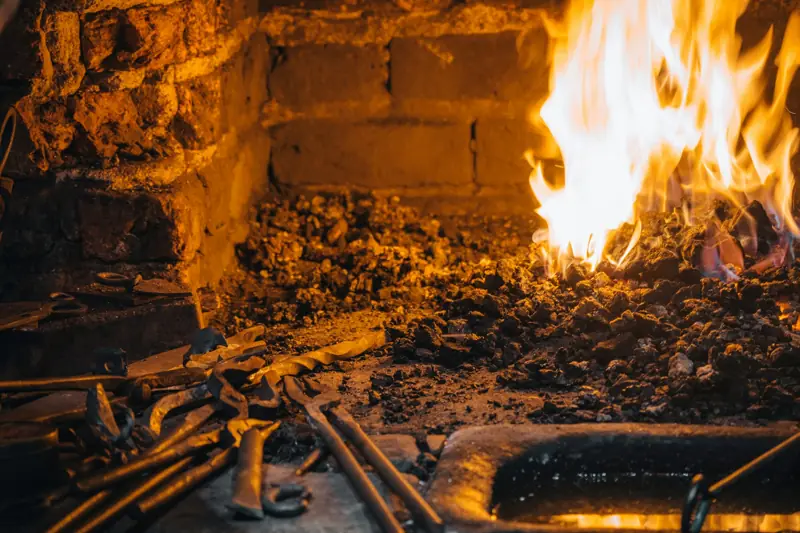
What happens on a knife making experience day
A typical one-day knife making course, step by step, plus what to wear and bring.
Every forge runs its day differently, but most one-day knife making courses follow a similar pattern. Check the forge's own listing for its exact timings.
A typical day
- Welcome and safety briefing. How the forge, tools and protective kit work.
- Forging or shaping the blade. The longest part of the day, at the anvil or the grinder.
- Heat treatment. Hardening the steel, then tempering it so it's tough as well as hard.
- Handle. Shaping and fitting a wooden handle, or finishing an all-steel handle.
- Sharpening and finishing. Putting an edge on your knife and cleaning it up to take home.
What to wear
Most forges ask for natural-fibre clothes you don't mind marking (cotton or wool, not synthetics, which can melt), long trousers and sturdy closed-toe shoes or boots. Tie back long hair. Forges usually provide eye protection, aprons and gloves, but check the listing.
Taking your knife home
In the UK there are rules about carrying knives in public. Wrap your knife securely and carry it straight home. For the law itself, read the government's guidance on buying and carrying knives. This isn't legal advice.
Age limits
Most courses are for adults. Some forges accept teenagers with a parent or guardian; the minimum age is shown on each listing where the forge gives it.
Ready to choose? Find a course near you.